If you’ve ever supported a student with significant behaviors, you know how quickly things can escalate without a clear plan in place. A well-written behavior safety plan gives your team a structured, proactive way to respond to unsafe behavior. It ensures consistency across staff, protects students, and creates a safer learning environment for everyone.
Whether you’re writing your first student safety plan or refining an existing behavior intervention and safety plan, this step-by-step guide will walk you through the process I’ve used with students for years.
What Is a Behavior Safety Plan?
A behavior safety plan is a structured document that outlines how staff will prevent, respond to, and document unsafe student behavior.
It typically includes:
- Clear definitions of unsafe behaviors
- Prevention and de-escalation strategies
- Staff roles during a crisis
- Emergency procedures
- Documentation and communication protocols
These plans are often used alongside a Behavior Intervention Plan (BIP), especially for students with intensive behavioral needs. The safety plan is typically more thorough and does not include a summary of the behavioral evaluation that was conducted. These are more practical, easy to follow, and take the guess work out of what to do when challenging behavior occurs.
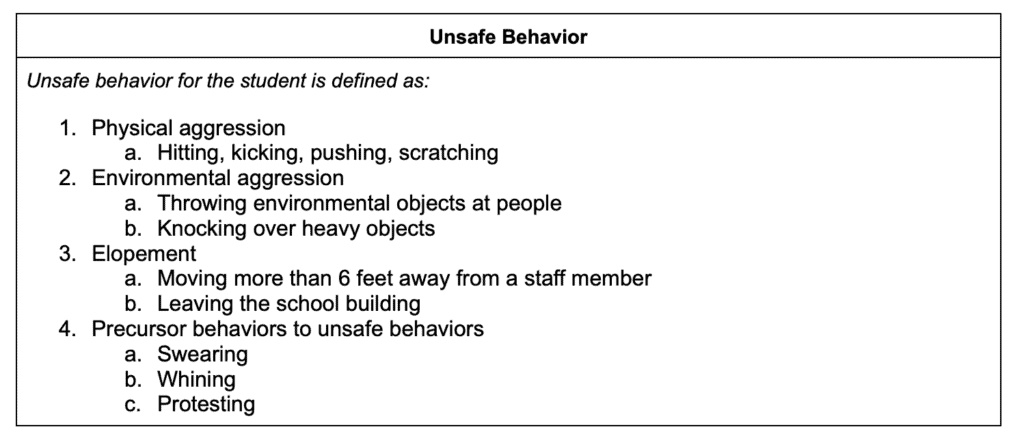
Step 1: Define Unsafe Behavior Clearly
Every effective behavior safety plan for students starts with clear, observable definitions.
For example, if a student engages in aggresion, we want to avoid vague umbrella terms like “aggression” and instead specify:
- Hitting, kicking, pushing, scratching
- Throwing objects at others
- Using hands, feet, items, etc.
Don’t forget to include precursor behaviors, such as:
- Swearing
- Whining
- Refusal or protesting
Step 2: Plan Preventative and Preparatory Supports
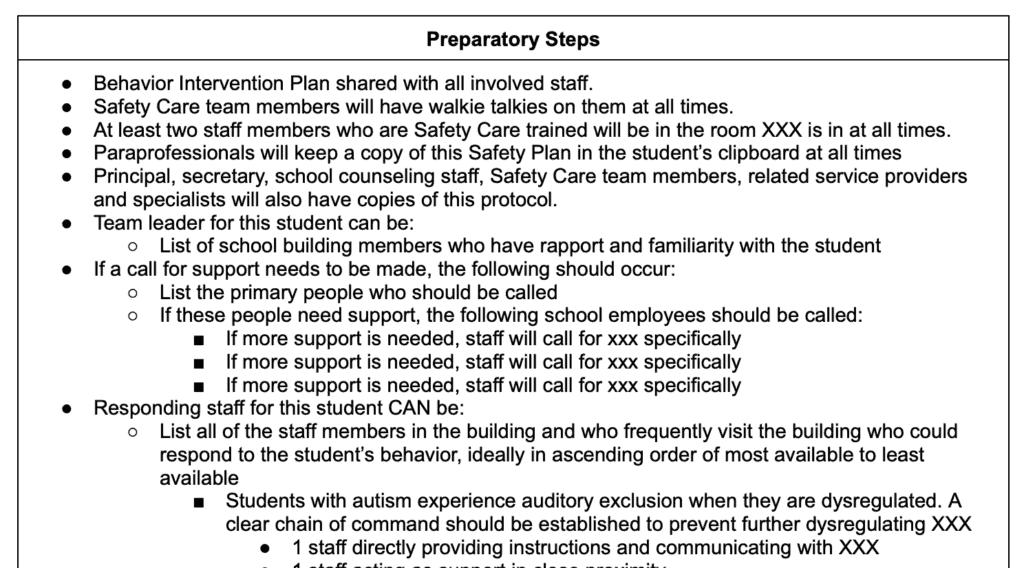
A strong school behavior safety plan focuses on prevention first. These steps are designed to prevent confusion in a crisis and establish a clear chain of command in the event of an escalation.
Include:
- Sharing the Behavior Intervention Plan (BIP) with all staff
- Ensuring trained staff are present
- Communication systems (walkie-talkies, office calls)
- Easy access to the safety plan
- A clearly identified crisis leader
Also define:
- Who responds first
- Who provides backup
- When to call additional support
Step 3: Assign Staff Roles During a Behavior Crisis
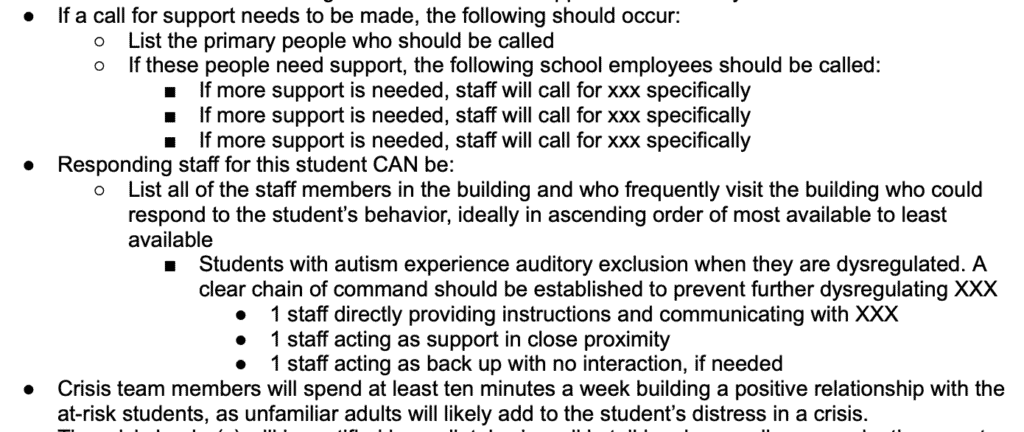
Clearly defined roles are critical in any behavior crisis plan in schools.
Your plan should include:
- One staff member communicating with the student
- One staff member providing close support
- One staff member acting as backup
This reduces confusion and prevents escalation caused by too many directives.
Step 4: Outline De-Escalation Strategies
Every student behavior safety plan should include clear de-escalation procedures.
Examples include:
- Offering a break or change of activity
- Prompting communication (AAC, visuals, etc.)
- Using calm, regulated language
- Co-regulation strategies
For some students (e.g., those with anxiety or PDA profiles), language matters significantly. Declarative, low-demand communication can reduce escalation and this should be included in your behavior safety plan. Even going as far as to provide sample scripts that staff should use can be extremely helpful.
Step 5: Define Crisis-Level (Unsafe) Behavior Response
Your behavior safety plan for aggressive behavior should clearly outline what happens when behavior becomes unsafe.
Include:
- Criteria for calling the crisis team
- When to remove other students
- When administration should be involved
If applicable, include:
- Guidelines for physical intervention (last resort only)
- Use of safe spaces (aligned with state laws)
Step 6: Plan for Safe Return to the Classroom
A strong behavior intervention safety plan includes what happens after the incident.
Define:
- What “calm and ready” looks like
- How long regulation should be observed
- What activities the student returns to
Important:
Some students should not be required to return to the original demand if it may trigger re-escalation. If that includes your student, make it very clear that this is not an expectation. You don’t want to leave any room for mishandling the situation.
Step 7: Include Family Communication Procedures
Your school safety plan for behavior should clearly outline:
- When families are contacted
- How they are contacted
- Who is responsible for contacting the family
Consistent communication builds trust and ensures transparency. Make sure to include family contact information on the plan, and if necessary note the family’s native language and need for a translator.
Step 8: Document All Behavior Incidents
Documentation is a critical part of any behavior safety plan in special education.
Include:
- What forms are completed (i.e. do you have a district wide crisis form?)
- Who completes them
- Timeline (e.g., within 24 hours)
- Who receives copies of the documentation
This supports compliance and helps teams identify patterns over time.
Step 9: Establish Emergency Protocols
Your behavior crisis safety plan should include clear emergency procedures, even if you have never observed a behavior escalating to this point.
This may involve:
- Contacting administration
- Calling crisis services
- Calling 911 if necessary
Be explicit—staff should never have to guess in an emergency. Provide clear, agreed upon criteria to meet before any of the above actions are taken.
Behavior Safety Plans Should Be Living Documents
An effective behavior safety plan is not static.
It should be:
- Reviewed regularly
- Updated based on behavior data
- Adjusted as student needs change
- Shared with all staff consistently
- Reviewed with the student, if applicable
Consistency is what makes behavior plans effective.
Free Behavior Safety Plan Template (Grab Yours)
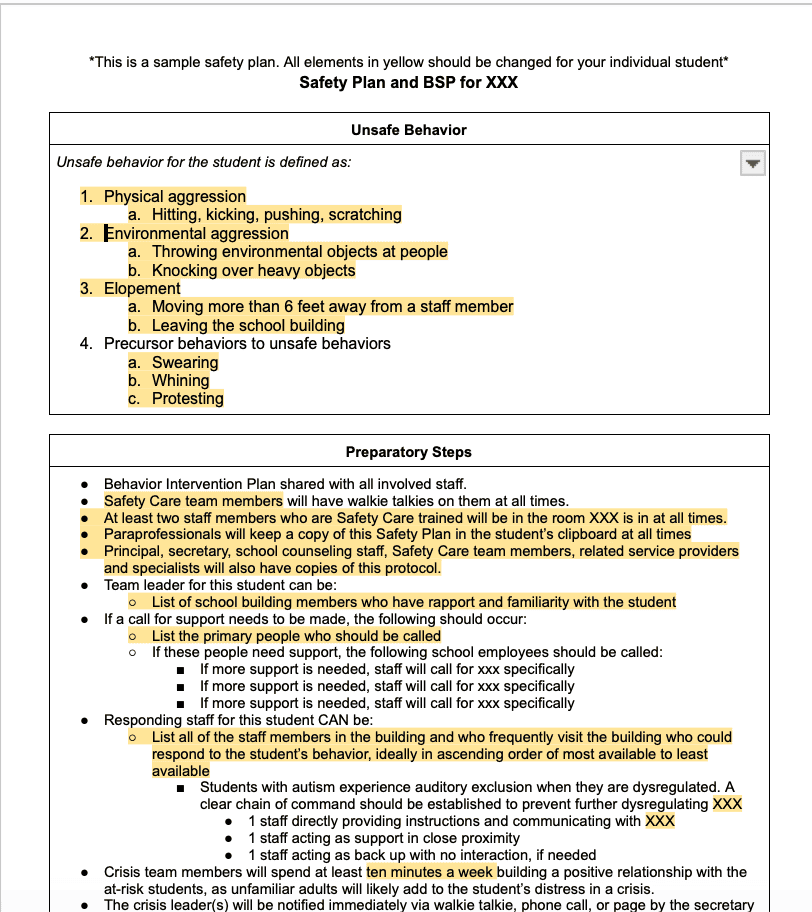
Creating a behavior safety plan for students with challenging behavior can feel overwhelming—especially when you’re starting from scratch.
That’s why I created a free, editable behavior safety plan template you can use with your team.
It walks you through:
- Each step in this process
- Clear prompts for writing your plan
- A format your entire team can follow
👉 Download the free behavior safety plan template from my resource library and start building a plan that actually works below!