Supporting students with high support needs in inclusive classrooms can be challenging, especially without clear daily plans. Paraprofessionals play a crucial role in helping our students access the curriculum and participate meaningfully in school activities. Well-structured, clear daily plans can ensure that paraprofessionals provide consistent and targeted support, enhancing student outcomes. Here’s how I have been creating plans for my staff to help structure their time with their students and ensure IEP goals are being targeted during the day. Even if you only have students who are included for part of the day, you can still use this template to organize and plan for that inclusion time.
1. Start with Clear Objectives
The foundation of an effective daily plan is clarity on each student’s learning objectives. Begin by identifying what each student is expected to achieve by the end of the day, and share these goals with the paraprofessional. Whether it’s a skill related to literacy, numeracy, social interactions, or behavior, stating clear objectives helps the paraprofessional focus their support where it is most needed. For students with Individualized Education Programs (IEPs), tie these objectives to specific IEP goals. This alignment not only keeps the student on track academically but also makes their learning experience in an inclusion setting more relevant and impactful. I find it helpful to list them out for the paraprofessionals to reference daily. Especially if paraprofessionals are rotating between students, reminders about the student’s objectives are crucial.
2. Break Down the Day by Activities and Periods
Divide the day into segments, and specify what the paraprofessional’s role should be in each period or activity and what the student is expected to do in those periods. Outline the tasks and strategies for each lesson, including specific accommodations and modifications needed to facilitate full participation in an inclusion setting. For example, during a math lesson, specify if the paraprofessional should help a student use manipulatives, work on a modified worksheet, or assist with peer interaction. Breaking down the day in this way reduces guesswork, allowing paraprofessionals to support students effectively and efficiently.
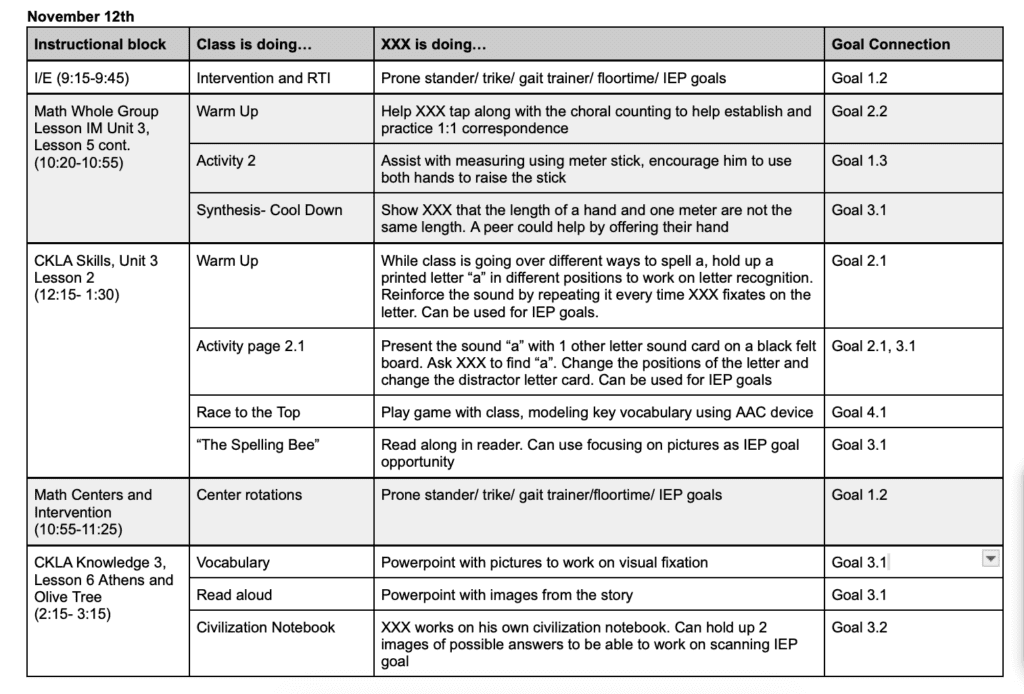
Below is an example of a day of paraprofessional plans for a past student. You can see that I’ve broken up the day into the instructional blocks in the student’s day, specified what the class should be doing, and then specified what the student should be doing during that time. This was a student who spent most of their time in inclusion, but had mobility programs and other pull-out services several times a day. I had the general education teacher share with me her plans for the week, and then I was able to map out a week of activities for the student related to their goals.
3. Include Behavioral and Social Goals
In inclusive classrooms, students often face not only academic but also social and behavioral challenges. Incorporate social skills and behavioral goals into the daily plan to help paraprofessionals foster positive interactions and self-regulation. For instance, if a student needs support with transitions, note when and how the paraprofessional should assist. Provide simple cues or strategies to promote positive behavior, such as using visual schedules, providing breaks, or reinforcing self-advocacy. By including these goals in the daily plan, paraprofessionals can help students better manage their day-to-day experiences in an inclusion setting, making it a more welcoming and supportive space.
In the example above, you’ll see that I embedded reminders to model social language for the paraprofessional. I also made it clear that the student should participate in group activities in the classroom. It may seem redundant to write this every week, but these reminders are your evidence of implementing accommodations and modifications for the student. They also help when a substitute paraprofessional or new hire is working with a student.
4. Use Accessible Language and Tools
When drafting a daily plan, make sure it’s clear, concise, and easy to follow. If possible, try to keep it to 1 page for readability. Use straightforward language and consider including a checklist format if that’s helpful for the paraprofessional. If helpful, you might want to consider including a list of the student’s accommodations or goals on the back or in the footer of the daily plan as a reminder for the staff working with the student. By organizing the plan in a user-friendly way, paraprofessionals can stay focused and confident in their role, even on busy days.
5. Allow for Flexibility and Feedback
While structure is essential, flexibility is equally important. Paraprofessionals should have the autonomy to adjust the plan based on students’ immediate needs or unforeseen changes. Encourage paraprofessionals to communicate feedback about what worked and what didn’t each day. This feedback loop allows teachers to adapt future plans and ensures that support in the inclusion setting remains responsive and effective.
You might want to consider adding a QR code to your daily plans and linking that QR code to a Google Sheet. This sheet can serve as journal communication between you and the paraprofessional working with the student you’re making plans for. Sometimes finding time in the day to touch base is difficult, so this system makes sure feedback is collected and allows you to review it on your schedule. If you need help making a QR code to include on daily plans, I have a tutorial in this blog post.
6. Foster Team Collaboration
Creating a daily plan for paraprofessionals is not a one-sided task; it’s a team effort that benefits from ongoing collaboration. Take time to check in with paraprofessionals regularly, listen to their insights, and involve them in the planning process. Building strong communication and trust ensures that paraprofessionals feel valued and motivated to make the inclusion experience a positive one for students. It is also important that if the paraprofessional is integrating goals from a related service provider, that provider is helping draft these daily plans with you! For example, get your OT involved to help plan out the writing part of a lesson or you SLP involved to help plan out the correct way to model and prompt using AAC during partner work.
Why You Should Use This
Writing a daily plan for paraprofessionals working in inclusion settings goes beyond mere scheduling. It’s about creating a roadmap that guides paraprofessionals in supporting students with high support needs effectively, fostering their academic and social growth, and contributing to a truly inclusive classroom environment. With clear goals, structured activities, flexibility, and team collaboration, teachers can empower paraprofessionals to make a meaningful difference in the lives of students every day.
Pro Tip: Use AI where you can in order to take some of the mental load off of creating these plans!
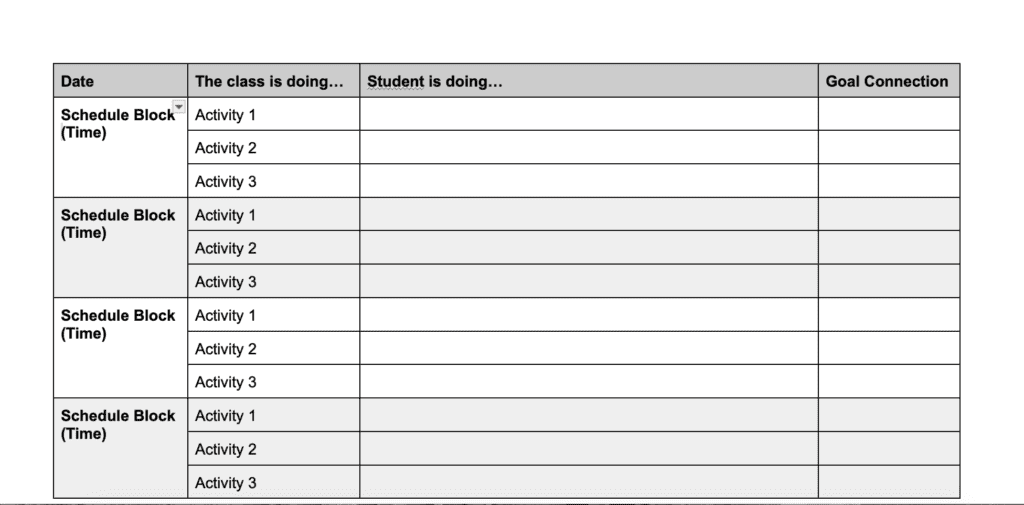
Steal my plans! You can find a copy of this template for daily plans in my free resource library!