
Back to school time can be really exciting and overwhelming. The to-do list is long, the amount of paid contract hours to get everything set up is short, and all the while you’re trying to squeeze out a little more summer. I used to get so overwhelmed with getting my classroom in a picture-perfect state before the students started, but in recent years I’ve switched up my mindset and it has made all the difference- it’s all about paraprofessional training!
The Importance of Paraprofessional Training
Creating a well-run and functional classroom is the goal, but that doesn’t come from setting up perfect bulletin boards or creating a whole-classroom aesthetic theme. The best run special education classrooms have a group of adults who are well equipped to handle all the challenges that get thrown their way during the day. What is the point of having beautifully set up center stations if your paraprofessionals don’t have the understanding of why you set them up a certain way and how to teach students to be more independent? What is the point of having AAC symbols throughout your room but the adults don’t know how to utilize them to increase communication?
Paraprofessional training is a high-leverage strategy you can use to ensure your students are getting the most out of your classroom setup. When all the adults in your room are on the same page, things run so much more smoothly but most importantly they run to fidelity. Think about all the different aspects of your students’ IEPs that you have to be responsible for- accommodations, goal monitoring, meeting service delivery minutes, etc. If even one of your paraprofessionals isn’t following those plans they way they were written, you are going to have lots of problems down the road. Saying, “I didn’t have time to train them on this!” isn’t going to hold up to an advocate or mediator if a parent questions their child’s IEP implementation.
Finding the Time To Train
But how do we fit in time for paraprofessional training? It can be so difficult, especially at the beginning of the year when you have tons of meetings to attend, you’re trying to get in planning time with other teachers, you need to unpack 12 boxes from the spring, etc. Here are the ways I have found to fit in paraprofessional training throughout the year but especially at the beginning of the year. Hopefully you can utilize a few of these strategies to get all the adults working with your students on the same page quickly!
- Ask your principal for time. There was one year when I had 1 returning staff member and all the others were new and had never worked in special education, let along in a school! We needed way more time than the 2 hours we were given the day before school started, so I asked my principal for help. She gladly worked with me to find time when herself and other trusted adults in the building could supervise our classroom for extra recess or open gym time so that I could work on staff training. This was such a game changer, especially for that first month of school. Here is a simple email template to send to your admin if you’d like to try this strategy:
- “Hi _________, A critical component of making sure all of my students’ IEPs are followed to fidelity is to ensure my paraprofessionals have adequate training time. I am in need of help to find time to do this when my paraprofessionals and I are not supervising students. I’d like to work together with you to find a time when my classroom can receive coverage for 30 minutes a week so we can go over important topics like providing accommodations, supporting students in inclusion, responding to behavior, etc. Let me know when we can meet to work out a plan to accomplish this. Thank you, ________”
- Utilize related service provider time. Many of your students are going to have time with related service providers like occupational therapists and speech/language pathologists. When your students are with those related service providers, if you can spare your staff for those 30 minutes it is a great time to have them go observe how those specialists work with your students because carry-over is so critical. If that isn’t possible or your related service providers do not want anyone observing a session, utilize that time in a different way. Have your paraprofessionals shadow you for that time doing something in the classroom, set them up with a training video (like these!), or give them time to review the students’ IEPs.
- Narrate what you’re doing. Sometimes there just isn’t going to be time away from students to get training done, but that doesn’t mean that everyday experiences can’t be opportunities for learning. When you’re running morning meeting or walking through a behavior or providing scaffolding during a lesson, share out loud with your paras what you’re doing and why. It can be a simple way to reinforce ideas around prompting, neurodiversity affirming language, supportive behavior response, etc. It’ll feel silly in the moment but I can’t tell you the number of times I’ve done this and had paras say, “Oh that’s why you do that!” in response.
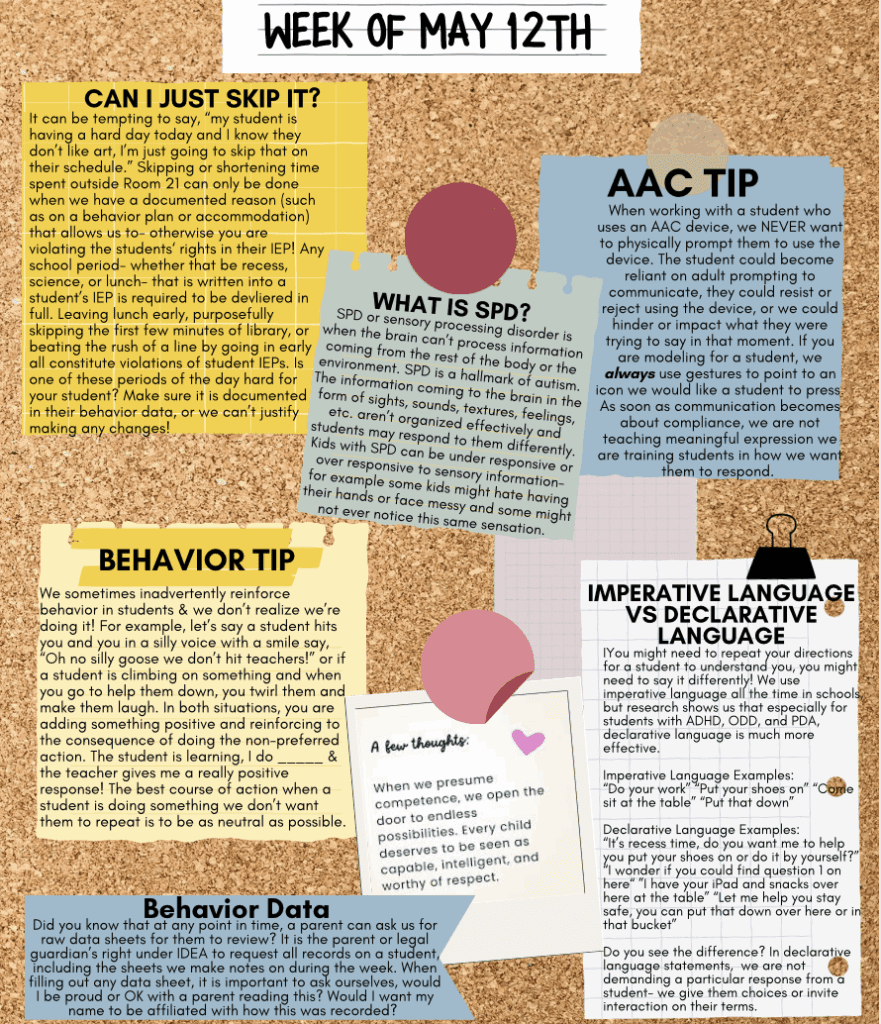
- Send out a weekly newsletter. This was something I started doing this year and got a lot of positive feedback on. Once a week, I would send out an email with some classroom updates, little training blurbs, and reminders for all of us working in the classroom. I am more likely to read something aesthetically pleasing so I would create this on Canva and then send out to staff (example below). What is helpful about this format is that you have a built in reminder for a weekly training update, and staff can look back on your emails as a reminder for how to do something if they forget.
These are all strategies I have personally used in my special education classroom. I have never regretted making time to work on training. Knowing that your staff is equipped to handle things when you aren’t around will give you so much peace of mind but will also ensure that you’re meeting IEPs. If you need help with paraprofessional training and don’t know where to start, I have a whole section of resources in my Teachers Pay Teachers storefront designed to make training paraprofessionals easy and quick.
Do you have any questions about how to fit in paraprofessional training at the beginning of the school year? Send me an email and we can brainstorm how to help you get the time you need!