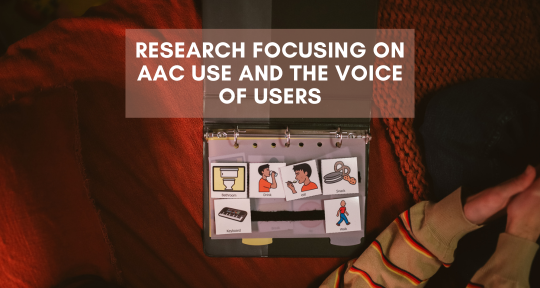
If you’ve ever worked on modeling an AAC device for a student during free play and wondered, “Is this actually helping?” — researchers are finally starting to dig into that question. A systematic review published this April (Klein et al., 2026) is the first of its kind to look specifically at play-based and play-integrated AAC interventions for minimally verbal and nonspeaking children. And while the research is still in its early stages, there are some really meaningful takeaways for special education teachers. You can read the full article here.
So, What Did the Review Actually Look At?
About 30% of children with ASD and significant communication delays fall into the minimally verbal or nonspeaking category. That’s a lot of kids — and play is one of the most important developmental contexts in their lives. Children use play to explore their world, build relationships, acquire language, and practice social communication. They negotiate with each other during play, describe what they see and do, and build on each other’s communication naturally (Levy, 1984). And yet, researchers have barely touched the question of how to use play to teach AAC.
The researchers behind this review pulled together every study they could find that combined AAC use — high-tech, low-tech, or unaided — with play, games, or toys, and focused on children ages 3–8 with intellectual disabilities, developmental disabilities, or autism. After screening nearly 2,900 records, they landed on just 14 studies that met their criteria. That small number tells you something important: this is a wide-open area of research.
One of the first things the researchers flag? Play is genuinely hard to define. No agreed-upon definition exists, which means the studies they included look pretty different from one another — a reflection of how differently “play-based” gets interpreted across classrooms and therapy rooms.
An important note before diving in: this review draws its studies from a larger preregistered meta-analysis (Reichle et al., under review). The play findings here are descriptive — meaning researchers aren’t yet reporting effect sizes for play-based AAC specifically. We’re at the very beginning of building this evidence base.
There were three types of play-based interventions in the studies they reviewed:
- Behavioral: In these interventions, opportunities to use AAC were contrived and instructor-mediated. These interventions were based on the work of Ivar Lovaas and follow discrete-trial training.
- Naturalistic: These interventions use the routines and free-play times that the children were already engaging in as opportunities to build in AAC teaching time.
- Naturalistic Developmental Behavioral Interventions (NDBIs): These are hybrid interventions that contain elements of both behavioral and naturalistic interventions. NDBIs introduce some of the systematic and contrived elements of behavioral approaches into play or daily routines.
What The Research Found About Play and AAC
Here are some of the big patterns across the studies:
Most interventions were adult-directed. About 71% of studies used interventionist-led approaches, and about half were rooted in a behavioral framework (think discrete trial training, structured prompting hierarchies, etc). That said, a clear shift shows up in the timeline: almost every child-directed, naturalistic study appeared after 2010. Older studies planted play firmly in the behavioral camp, using it as a reward rather than a teaching context for teaching AAC competencies. Newer ones, particularly those using Naturalistic Developmental Behavioral Interventions (NDBIs), treat play as the medium for learning — child-led, interest-driven, embedded in real routines. That’s the direction the field is heading.
Play was sometimes a teaching context, sometimes a reward. In 57% of studies, play happened during the intervention itself — kids played as they learned to communicate. In the other 43%, play came after a communicative attempt, functioning as reinforcement. The framework mattered here: every naturalistic study used play during AAC instruction, while nearly every behavioral study saved it for the reward.
Almost all of the play was functional or manipulative. Every study used functional or manipulative play — cause-and-effect toys, simple object play, and basic games. The richer forms of play that generate the most complex language and social interaction? Completely absent from the research base. This matters because developmental frameworks (Parten, 1932; Piaget, 1952) show us that cooperative and pretend play are precisely where social communication flourishes.
No peer interaction. At all. Here’s a finding that deserves more attention: in 64% of studies, children played alone. No partner at all — not a peer, not an adult. Play was just a backdrop. Even when a partner was present, that partner was always an adult — an interventionist, teacher, or parent. Not one study involved a peer as a play partner. Given everything we know about how peer relationships drive social communication development, especially for kids with disabilities, that’s a significant gap.
Most studies targeted requesting. The field has put the bulk of its energy into teaching kids to ask for things with their AAC devices. That’s a natural starting point, but it leaves a lot of other communication functions — commenting, protesting, narrating, connecting socially — largely unstudied in play contexts.
Only one study measured play as an outcome. This one definitely surprised me. Out of 14 studies, only Ingersoll et al. (2007) actually tracked what happened to play skills as a result of the intervention. Every other study only measured communication outcomes — AAC use via requesting. Researchers used play as a vehicle, but never looked back to see what it did for play itself.
Preference assessments were often skipped. More than half of the studies didn’t report whether they even assessed which toys the child preferred. And 64% didn’t clarify whether the toys were already familiar to the child or brought in specifically for the study. Research suggests that familiar, preferred objects may lead to faster skill acquisition and longer-term maintenance — so this is a meaningful gap, not just a methodological footnote.
What This Means for Your Classroom
Even with the research gaps, this review points to some really practical directions:
Do preference assessments before you plan. The research tells us that child interest drives communication motivation. Before you build a play-based AAC activity, find out what the kid actually loves. Then build from there.
Let kids choose. Several of the most promising studies in this review gave children control over toy selection as part of the intervention itself. Letting students choose their materials isn’t just a nice-to-do — it increases both engagement and autonomy, two things that matter enormously for AAC learners.
Consider moving beyond requesting. If your play-based AAC work mostly centers on “I want ___,” consider how you might open space for kids to comment, narrate, protest, or connect socially — even in small, low-stakes ways during play.
Play isn’t just a break — it’s a teaching context. The shift toward NDBIs in the research reflects something great special education teachers have long understood: kids learn in context, through interaction, during the activities that actually mean something to them. Now there’s a growing evidence base to back that up.
Consider who the play partner is. The complete absence of peer-mediated AAC research is striking. You may already facilitate AAC use between students during play. That work matters — and the field needs more of it studied and documented.
The Bottom Line for Play and AAC
Fourteen studies. That’s what we have. The field has barely scratched the surface of what’s possible when we bring play and AAC together intentionally — and the research that does exist skews heavily toward structured, adult-directed, solitary play with a narrow focus on requesting.
The gaps aren’t discouraging. They’re an invitation. What you observe in your classroom, the peer play you facilitate, the pretend play you embed AAC into, the preference assessments you run before building a lesson — that’s exactly what the research needs more of. For example, using AAC during shared reading- I have a whole post about that here!
Keep playing. Keep communicating. The science is catching up.
Reference: Klein, M. J., Banerjee, A., Bhana-Lopez, N., Ganz, J. B., Bodenhamer, S., & Altamira, W. (2026). A Systematic Review of Play-Integrated AAC Interventions for Minimally Verbal and Nonspeaking Children. Autism & Developmental Language Impairments, 11.